In my previous posts I argued that the song of the “suffering servant” was a message of hope for the exiles in Babylon. The writer was either living among the captives or was one of the people who was left in the Land, and wrote to encourage the captives to cross the desert and return to their homeland where a restored and revitalised nation of Israel would rise to prominence on the world stage. He personified the exiles as a suffering servant of God whose fortunes were about to change and who would be “exalted.” To my mind this is the most natural reading of the poem in its context. It isn’t unusual to personify the nation as a servant, and the writer actually does this several times throughout chapters 40-56. However, by referring to this servant in the singular the writer creates some ambiguity: is he referring to the nation, or to some individual? If it is an individual, then who? Could he be speaking about himself, or someone else? (This is precisely the question asked by the Ethiopian official in Acts 8:34.)
Several scholars have come to the conclusion that Second Isaiah’s language in this poem reflects the pain of an individual so intensely that the writer may well be speaking of himself, although there is not even a hint in the book as to who the writer might be. A few scholars* have argued that the suffering servant was King Jehoiachin (also known as Jeconiah) who was taken into captivity by the Babylonians. I personally think this proposition has a lot of merit. Jehoiachin was on the throne for only 3 months and 10 days when he was taken into exile at the age of 18 and made a prisoner in Babylon. The court officials who were taken into exile with him would have included many of the priests and scribes who were responsible for keeping the kingdom’s records and preserving and maintaining both civil and religious documents and archives. Some excellent scholarship has been done on the work undertaken by these scribes in captivity, and there is now practically a consensus amongst biblical scholars that much of the Hebrew Bible as we know it was composed, copied, edited and redacted in the hands of these scribes in Babylon, who were probably confined together with Jehoiachin. For example, the book of Kings concludes with a description of Jehoiachin’s time in Babylon, enabling us to date fairly precisely when the final lines of the book were written.
In the thirty-seventh year of the exile of King Jehoiachin of Judah, in the twelfth month, on the twenty-seventh day of the month, King Evil-merodach of Babylon, in the year that he began to reign, released King Jehoiachin of Judah from prison; he spoke kindly to him, and gave him a seat above the other seats of the kings who were with him in Babylon. So Jehoiachin put aside his prison clothes. Every day of his life he dined regularly in the king’s presence. For his allowance, a regular allowance was given him by the king, a portion every day, as long as he lived.
2 Kings 25:27-30
As these are the concluding lines of Kings we can be confident that the book was written, or completed, in the 37th year of the exile, or soon after, around 562BCE (For more details on the dating and archaeological confirmation, read my post here. Chronicles, on the other hand, concludes with the return from exile, so it was clearly written later.) It describes Jehoiachin’s elevation from prison to a place of honour in the royal court of Babylon, and for the other captives this would have been an encouraging sign that their fortunes as a nation may have been about to change. Seeing the king elevated from prison to honour would have provided hope, and the scribes who were responsible for preserving the teachings of the prophet Isaiah may have taken the opportunity to write the song of the servant who was “exalted and lifted up” against this background and as a fitting sequel to Isaiah’s message. Jehoiachin’s exaltation after so long in prison would have seemed miraculous, or, in the words of Isaiah 53:1, “Who would have believed it?”
Kings of Judah, like all kings and rulers, were held to be responsible for both the fortunes and misfortunes of the nation. If they ruled well the nation prospered; if they made poor decisions the nation suffered. Their personal successes or failures were mirrored in the nation as prosperity or disaster. As the leader of the nation they represented it, and personified it. Coming to the throne at the age of 18 and ruling for such a short time Jehoiachin had little time to exercise any influence and could be described as “a young plant” and “a root out of dry ground” (Isaiah 53:2). As a captive he was “taken away” and as a prisoner in a foreign land “he was cut off from the land of the living” while no one could have imagined a future for him (v.8). As the representative of the people and embodiment of the nation it could be said that his sufferings were on behalf of his people and for their sins. Having reigned for only 3 months he could hardly have done much to warrant this treatment on account of his own actions, and so it is described as “a perversion of justice” (v.8). It could be said that he therefore suffered for the sins of the people, rather than his own actions: “he was wounded for our transgressions, crushed for our iniquities” (v.5). Yet, according to the writer of this poem, because he suffered in silence and accepted his lot with patience God would “allot him a portion with the great, and he shall divide the spoil with the strong” (v.12). The poem begins and ends with the servant being exalted, seated with the great.
Whether the servant song is about Israel/Judah in exile, or about their king who represented the nation, its purpose would have been to encourage the exiles and give them hope. Jehoiachin’s exaltation would undoubtedly have done that and so I personally think there is a convincing case that the occasion probably provided the immediate impetus for writing the poem. The fact that later writers (such as some of the writers of the New Testament) saw resemblances to the sufferings of Jesus, means that the poem could be appropriated and re-applied to this new situation. But the application to Jesus was not the primary meaning. In the context of the exile, and for people who were languishing in a foreign land, a vision of a Messianic figure who was to come hundreds of years later would have provided little or no comfort. However, a change in the fortunes of their king, present with them in exile, would have been immensely encouraging.
______________
* For example, see Michael Goulder, ‘”Behold My Servant Jehoiachin”.’ Vetus Testamentum 52, no. 2 (2002): 175-90.
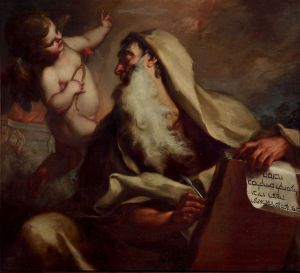
By the way, I’ve used a painting of Isaiah above by Antonio Balestra, although, as I’ve explained previously, I agree with the majority of biblical scholars who argue that Isaiah 40-56 was not written by the prophet Isaiah but rather by someone living at the time of the exile more than a century later.
 מִקְרָא Mikra: Biblical studies
isn’t it obvious that the suffering servant is Jesus Christ?
No, it isn’t obvious at all. Did you even read the article?
Sorry I didn’t read parts 1-3 for earlier analysis. While I agree that you need to take in the historical context there are places in Isaiah of a coming servant. How would you reconcile Isaiah 9:6?
I also think that Isaiah 43:10 “Ye are my witnesses, saith the Lord,
And my servant whom I have chosen:
That ye may know and believe me,
And understand that I am he:
Before me there was no God formed,
Neither shall there be after me.” That YWHW is saying he is to be the servant. Such that God is made manifest to reconcile the world unto himself.
I’m not sure I understand why Isaiah 9:6 needs to be “reconciled” with Isaiah 53. Isaiah 9 is speaking about a son who was born, presumably to the king, and was a beacon of hope for the future as a Davidic king. The Hebrew is difficult and confusing, which is reflected in the variety of translations for it. For example, the NRSV has:
For a child has been born for us,
a son given to us;
authority rests upon his shoulders;
and he is named
Wonderful Counselor, Mighty God,
Everlasting Father, Prince of Peace.
On the other hand, the NET Notes comment “There is great debate over the syntactical structure of the verse. No subject is indicated for the verb “he called.” If all the titles that follow are ones given to the king, then the subject of the verb must be indefinite, “one calls.” However, some have suggested that one to three of the titles that follow refer to God, not the king. For example, the traditional punctuation of the Hebrew text suggests the translation, “and the Wonderful Adviser, the Mighty God called his name, ‘Everlasting Father, Prince of Peace.’”
For another possiblity see the NJPS which has:
For a child has been born to us,
A son has been given us.
And authority has settled on his shoulders.
He has been named
“The Mighty God is planning grace;
The Eternal Father, a peaceable ruler”—
It’s unclear whether these titles belong to the Davidic king-to-be, or whether some or all of them refer to God. The important thing to note in its context is that Isaiah is PRIMARILY referring to an actual child who was born at that time. It may have a SECONDARY prophetic application – the Talmudic Rabbis suggest, for example, that it refers to a future Messianic figure, and Christians by and large see it as referring to Jesus.
Isiaah 43:10 is less problematic. The speaker is God, addressing Israel. God calls Israel “my witnesses” and “my servant.” He calls on Israel to “believe me” (or “believe in me” as the NJPS has it), and understand that he (God) is the first and only god. God is not describing himself as the servant – he is speaking to the servant (Israel).