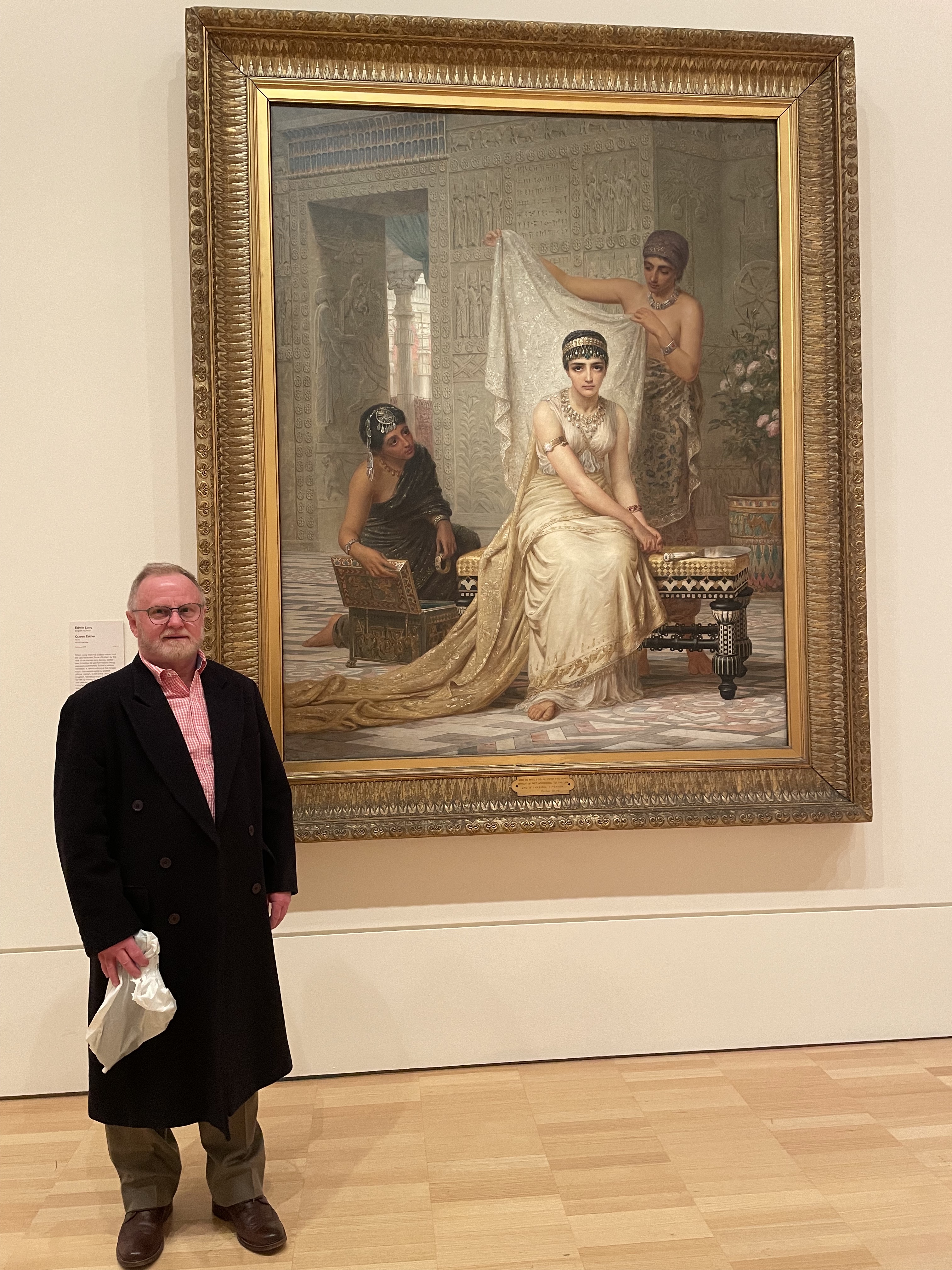
In a previous post I noted that there are at least two or three differing ancient versions of the book of Esther – the Hebrew Masoretic Text, the Septuagint Greek translation, and another ancient Greek version known as the α-text. I argued that these three versions of Esther demonstrates that from a very early time, quite likely soon after the story was first written down, alternative or expanded versions started to appear, and we have no idea which of these three reflects the earliest form of the story.
In a recent scholarly article in the Journal of Biblical Literature, a colleague at The University of Sydney, Dr Jonathan Thambyrajah, has closely examined the Vetus Latina, or Old Latin version of Esther, and compared it with other ancient versions (including the Georgian and Armenian translations), and similar material found in 3 Maccabees. [1]
One of the most fascinating things (for me) to come out of this very thorough article is that Vetus Latina Esther, though it has some features in common with the Septuagint and others in common with the α-text, tells the Esther story in a way that is distinct from either of them. Thambyrajah argues convincingly that these ancient versions interacted with each other, and that with VL Esther and 3 Maccabess there are at least two stages of borrowing between the texts and that the borrowing goes in both directions.
Although he does not argue this himself, I believe this analysis has implications for how we understand the processes by which books of the Bible circulated in various versions until they reached their final forms. It was not a simple process of translation and transmission. There is evidence instead of ongoing editing and redaction, with earlier versions sometimes possibly being revised in response to later versions. In my earlier post I concluded that for several other books of the Bible, beyond Esther, we can be confident that alternative, revised or expanded versions were also made. Sometimes we can detect evidence of redaction in the texts which we have, although we don’t have a complete record of the editorial process and we don’t know what the “original” form looked like. At best we can speak of the “final forms” – the versions which have been preserved in the Hebrew Masoretic Text, the Dead Sea Scrolls, the Greek Septuagint, and other ancient versions – but we should never refer to any of these texts as “the original” version.
_________________
[1] Thambyrajah, Jonathan A. “The Relationship between 3 Maccabees and the Vetus Latina of Esther.” Journal of Biblical Literature 141, no. 4 (2022): 699-715. See also an earlier article by the same author: Jonathan Thambyrajah, “A Macedonian in the Persian Court: Addition E of Esther and the Vetus Latina,“ Vetus Testamentum 71 (2021): 743–50.
 מִקְרָא Mikra: Biblical studies