The artwork in Stephen’s second post about Lot and his daughters is a 1636-1638 painting by Artemisia Gentileschi in the Toledo Museum of Art. I have blogged about this female artist before and you can search this site for previous blog posts which highlight several of her beautiful paintings.
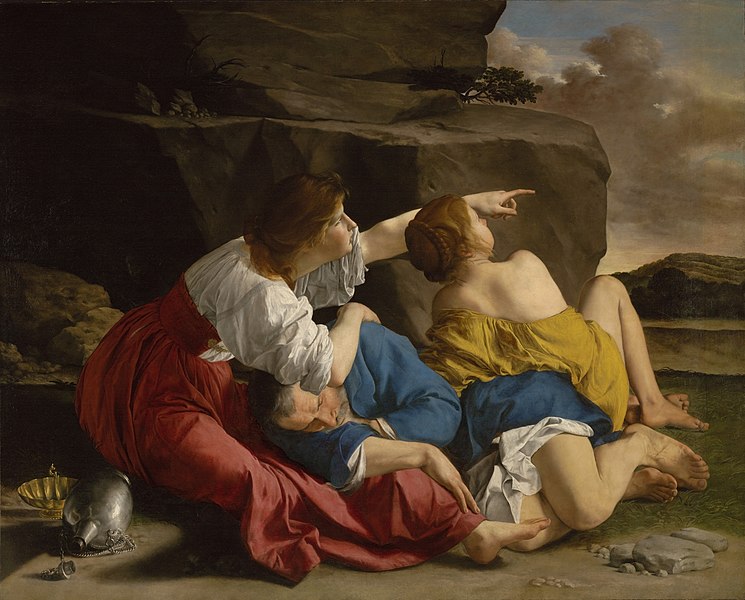
This female artist was rare for her time and, as was to be expected, she had a torrid experience within the male-dominated artistic world that she inhabited. Her father was Orazio Gentileschi, also an artist, and he too painted on the same theme, although I think his painting pictured here differs in interpretation.
Because of her experience with the opposite sex (an acquaintance of Orazio took advantage of Artemisia and raped her), Artemisia tended to paint strong women, or at least women with a mission or purpose which often seemed to involve revenge on men who were deemed evil in the stories from the Bible that she chose to paint. However, the Bible calls Lot “righteous” and in this painting I see some confusion or softening of Artemisia’s attitude to the characters portrayed and the actions they undertook. There are strong motives for the young women at play in this painting and Lot, although he was willing to partake of bread and wine and ultimately gave his daughters offspring, may have been a little in the dark regarding what was to ultimately occur.
Lot’s daughters reveal in the narrative that they have no extended family to fall back on in order to secure husbands and as was the custom of the day, producing children was a very strong theme in womens’ lives so they decide to seduce their father to produce children and to keep the family alive.
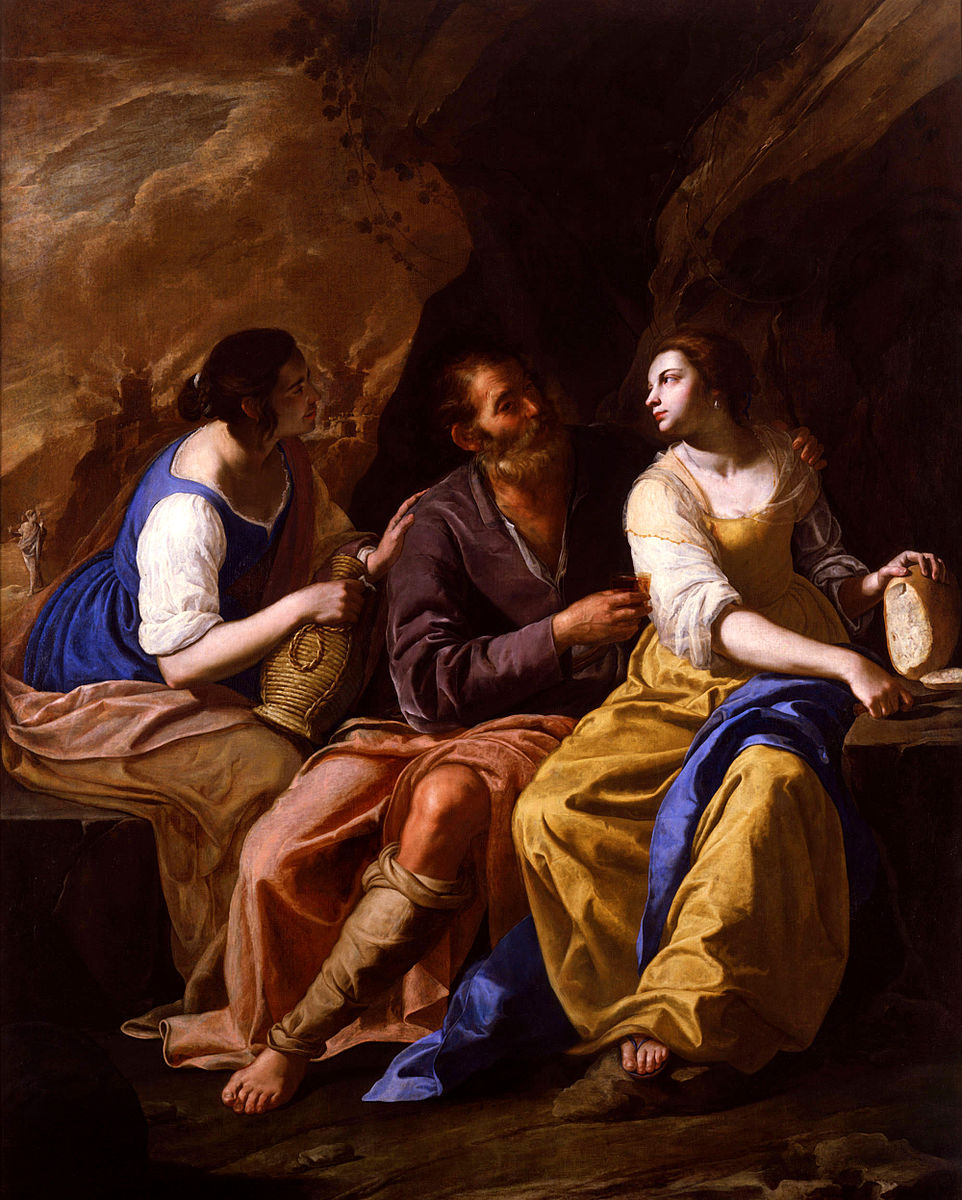
In Artemisia’s painting we see Lot and his daughters sitting in the entrance to the cave. The cave is dark but the light seems to come from the left and highlights the fact that the sisters have bread and wine. Lot looks adoringly or admiringly at one of his beautifully dressed daughters on the right of the picture and the daughter on the left seems to be encouraging him to relax and drink. Looking at the painting through a female lens we see both a strong desire to reproduce but also a hesitancy perhaps to judge the characters too harshly.
I imagine that the subject matter in the painting may have been rather risqué at the time given that it is about incest; however, the biblical narrative may have forgiven Lot for his actions. The daughters had decided upon their plan and the looks on their faces seem to suggest that they were rather determined to carry it out. Artemisia may have seen them as strong women who turned the tables on their situation and ultimately produced the nations of Moab and Ammon.
I love the artist’s use of rich colour and the draping of the garments. This is a beautiful example of 17th century Italian baroque. I also love that they have bare feet. They are resting after escaping Sodom. (This situation seems to fit with Dr. Timothy Rafferty’s research on the theme of sex and death in the Old Testament. After the destruction of Sodom comes the producing of new life. A new post about this theme may come shortly.)
Lot and His Daughters, 1622, by Orazio Gentileschi throws the light from the right and the painting is much more infused with light, suggesting that the subject matter is perhaps not so taboo to him as it might have been to his daughter. Perhaps women are all too easily cast as villians in this story whereas for men and Lot specifically, he is just an innocent man caught in the web of female trickery. However, if the Bible calls Lot righteous perhaps it forgives his daughters as well.
 מִקְרָא Mikra: Biblical studies