Here are quick links to all the posts in the ‘Biblical art’ category so you can see them at a glance. Most of these posts are written by Stephanie Cook, an art historian, and deal with the more technical artistic aspects of the various artworks which have been used to illustrate blog posts, their artists, and other art themes.
- How to read the Bible: inspiration and ‘inerrancy’
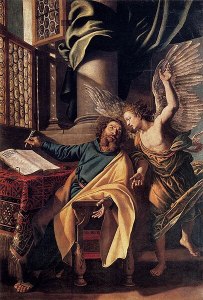 A reader recently left a comment which began this way: “I would interpret this differently. I would begin with the inerancy [sic] of God’s word …” I’d like to explore the idea of inerrancy further. Biblical ‘inerrancy’ is the idea or belief that the Bible is free from any errors. Every word is true. Every… Read more: How to read the Bible: inspiration and ‘inerrancy’
 - Could Julius Kronberg read Paleo-Hebrew?
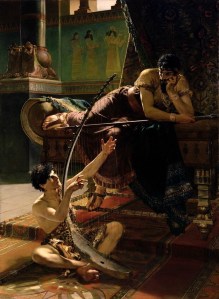 In three previous posts we have used the 1885 painting by Julius Kronberg titled “David and Saul” as an illustration. In my first post in a series titled “The Problem with Saul” (Unmaking a king) I commented in passing about this painting that “one would think from this painting that it was Saul, not Jonathan, who… Read more: Could Julius Kronberg read Paleo-Hebrew?
 - Lot and his daughters: (4) The art of Artemisia and Orazio Gentileschi
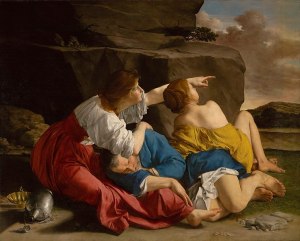 The artwork in Stephen’s second post about Lot and his daughters is a 1636-1638 painting by Artemisia Gentileschi in the Toledo Museum of Art. I have blogged about this female artist before and you can search this site for previous blog posts which highlight several of her beautiful paintings. This female artist was rare for… Read more: Lot and his daughters: (4) The art of Artemisia and Orazio Gentileschi
 - Lot and his daughters: (3) “the last people on earth”
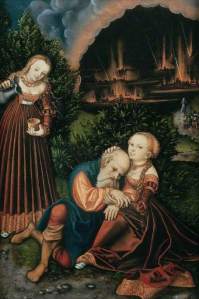 One of the great ironies of the story of Lot in Genesis 19 is that in the first part of the story he seemingly offered up his daughters to the mob to be gang-raped,[1] while there is an ironic reversal in the second part of the story where, according to some commentators, Lot is apparently… Read more: Lot and his daughters: (3) “the last people on earth”
 - ‘David and Michal’ by Virginio Grana, 1865, oil on canvas
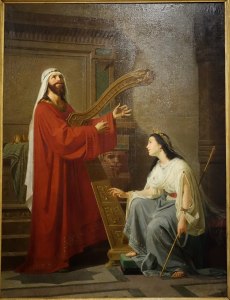 The painting ‘David and Michal’ is a beautiful work by the artist Virginio Grana. It was painted less than 200 hundred years ago and its subject matter seems to be rarely painted at all. I believe this may be because King Saul’s youngest daughter gets a bad rap in the Hebrew Bible and not many… Read more: ‘David and Michal’ by Virginio Grana, 1865, oil on canvas
 - David and Saul, by Julius Kronberg, 1885
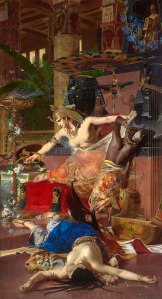 By Stephanie Cook. Stephen’s last post put a different spin on the relationship between David with Saul, with David coming out as the victor in the political wars of the time. Saul is portrayed as a bad king whose throne was given to another man, David. The painting of ‘David and Saul’ by the above… Read more: David and Saul, by Julius Kronberg, 1885
 - Rembrandt’s King Uzziah (or ‘A Man in Oriental Costume’)
 By Stephanie Cook Anyone who has been following Stephen’s recent series on ‘Heroes and Villains’ will have noticed the art work chosen for the post about King Uzziah. This work was executed by Rembrandt, which immediately makes us wake up and take notice. It is a striking painting and one isn’t surprised that it was… Read more: Rembrandt’s King Uzziah (or ‘A Man in Oriental Costume’)
 - Famous Nativity Paintings
 By Stephanie Cook As it is the festive season I decided to blog about the most famous nativity paintings that came out of Europe in the last approximately 800 years. There is of course a raft of paintings about this famous New Testament event and over the centuries many well known painters have applied their… Read more: Famous Nativity Paintings
 - Solomon, Wisdom and Biblical Art History
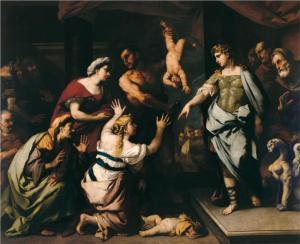 By Stephanie Cook Tim Rafferty and Stephen Cook have recently posted about Solomon’s wisdom, and Tim’s post was accompanied by a painting by Luca Giordano. (The painting here by Giordano titled The Judgement of Solomon could just as well have accompanied Stephen’s post.) Luca Giordano, 1634 to 1705, was an Italian late Baroque painter and… Read more: Solomon, Wisdom and Biblical Art History
 - Ancient Wells
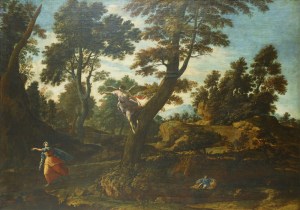 Ancient wells in Israel were not just a place to gather precious water but were a meeting place for the community and for travellers and single people to connect with each other. The biblical story of Jacob meeting Rachel and of his delight in finding her takes place at a well. Rachel was Jacob’s cousin… Read more: Ancient Wells
 - Madonna and Child in European Art
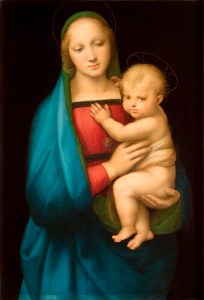 I promised that I would write about ‘Madonna and Child’ as a biblical art theme as there are so many examples of the subject in European and Orthodox art in centuries gone by. This shall be my last blog post for a while but the subject of Madonna and Child fascinates me mainly because Mary,… Read more: Madonna and Child in European Art
 - Inaccuracies in biblical art – a historical perspective
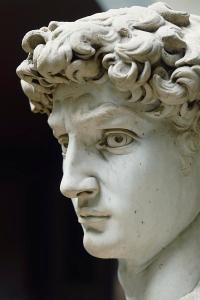 Following on from my blog post pertaining to the statue of David I would like to comment on the nature of David’s anatomy and the question of his circumcision. The statue, when executed, portrays David as uncircumcised when, as a Jewish man, he would definitely have been circumcised. There has been considerable discussion about whether… Read more: Inaccuracies in biblical art – a historical perspective
 - Michelangelo and the statue of David – a biblical theme loved by the artist
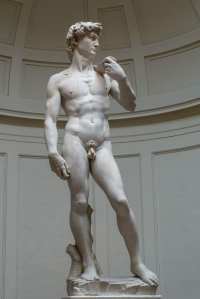 In my last blog post I mentioned the sculpture by Michelangelo of Israel’s king David. The statue is located in the Accademia Gallery in Florence, Italy. David is considered a masterpiece of Renaissance sculpture, created in the high renaissance period of Italy between 1501 – 1504. David is a 5.17 metre (17ft x 6.5ft) Carrara… Read more: Michelangelo and the statue of David – a biblical theme loved by the artist
 - ‘The David plates’ – Nine silver plates depicting early scenes of the Life of David
 A recent post showed a silver plate illustrating David’s confrontation with Eliab. In this blog post, the tenth I have written, I would like to explore the medium of silver in the form of decorative plates of the Byzantine era known as the David plates. These are a set of nine silver plates, in three… Read more: ‘The David plates’ – Nine silver plates depicting early scenes of the Life of David
 - Giovanni Francesco Barbieri (Il Guercino)’s ‘King David’
 Giovanni Francesco Barbieri, also known as Il Guercino, was an Italian Baroque painter and draftsman from Cento in the Emilia region. He was born in 1591 and died in 1666. His craftsmanship developed from naturalism to a baroque style. Stephen mentioned his painting of King David in one of his recent blogs and commented that… Read more: Giovanni Francesco Barbieri (Il Guercino)’s ‘King David’
 - The story of Adam and Eve in the Bible – Various Artists.
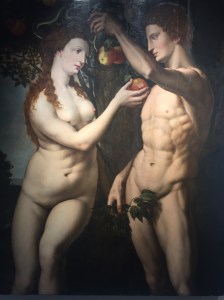 In this blog post I would like to explore the biblical theme of Adam and Eve and the garden. This origin story is so famous that many artists have attempted to capture the essence of the story on canvas. I was prompted to blog about this subject when I visited the Chau Chak Wing museum… Read more: The story of Adam and Eve in the Bible – Various Artists.
 - Biblical Women in Art – Susanna and the Elders
 In this blog post I would like to reference the story of Susanna and the Elders which is not in most Protestant Bibles but is known by many biblical scholars and readers the world over. I touched on this story in an earlier post, and Stephen has also referred to it in passing in a… Read more: Biblical Women in Art – Susanna and the Elders
 - Orazio Gentileschi – Painter of Biblical Beauty
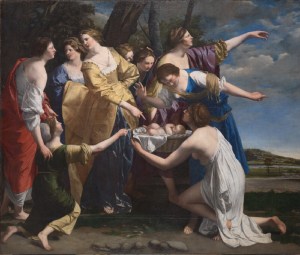 The painting and artist I would like to refer to today is ‘The Finding of Moses’ by Orazio Gentileschi, the father of Artemisia Gentileschi who has been referenced and written about in a previous post. The painting was executed in 1633 and is a beautiful example of a work that illustrates Orazio’s best artistic expression.… Read more: Orazio Gentileschi – Painter of Biblical Beauty
 - Rembrandt’s Hebrew
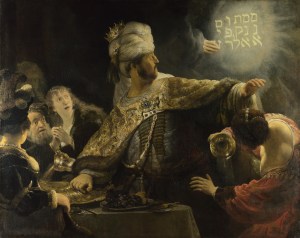 In a previous post Stephanie noted that beginning with the Renaissance artists began to include accurate Hebrew texts in some of their works portraying biblical characters, with prophets, for example, holding a parchment displaying a text from their biblical writings (Raphael’s Isaiah being an example of this). Before this artists often used illegible scrawl instead… Read more: Rembrandt’s Hebrew
 - Edwin Long and Edward Poynter – Orientalism, Neoclassicism and Biblical Art
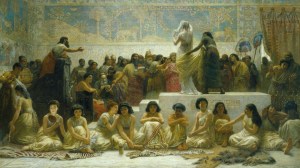 In one of Stephen’s blog posts on the book of Esther, he chose a painting by Edwin Long entitled ‘Queen Esther’ which was painted in 1878 and it resides in the National Gallery of Victoria. Edwin Long also painted a picture of Vashti, entitled ‘Vashti’ in 1879. He also famously painted a work entitled ‘Babylonian… Read more: Edwin Long and Edward Poynter – Orientalism, Neoclassicism and Biblical Art
 - Esther before Ahasuerus
 In my recent series on irony and satire in the book of Esther I pointed out that the Persian king Ahasuerus (pronounced Ahashverosh in Hebrew) is ridiculed in the story while Esther and her cousin Mordecai manage to persuade (manipulate?) him in order to save the Jews in the Persian empire from a planned genocide.… Read more: Esther before Ahasuerus
 - Hebrew, Greek or nonsense?
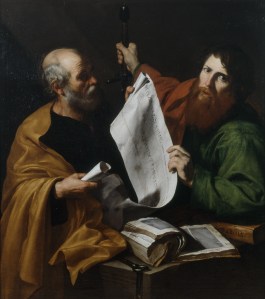 Two recent posts featured paintings which included Hebrew texts from the book of Isaiah. In an earlier post on Raphael, Stephanie commented that “before the birth of the Renaissance, many works that featured biblical themes had illegible scrawl substituted for Hebrew.” The above painting by Jusepe de Ribera is a good example of this. A… Read more: Hebrew, Greek or nonsense?
 - Eduard Bendemann – Jewish/German painter of the 19th century
 Eduard Julius Friedrich Bendemann was born on 3rd December 1811 in Berlin and he died on 27th December 1889 in Düsseldorf at the age of 78. His father was Anton Heinrich Bendemann, a Jewish banker. His mother Fanny was the daughter of Joel Samuel von Halle who was also a Jewish banker. Eduard’s education was… Read more: Eduard Bendemann – Jewish/German painter of the 19th century
 - Raphael – Renaissance Painter.
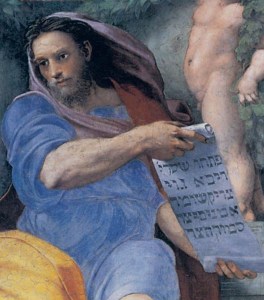 Raffaello Sanzio da Urbino was born on the 6th April 1483 in Urbino, Italy. He also died on the 6th April 1520 in Rome, Italy. He was known for painting and architecture and he wielded his craft in the Renaissance period of Italy. His work is admired for its clarity of form and ease of… Read more: Raphael – Renaissance Painter.
 מִקְרָא Mikra: Biblical studies