I’ve written quite a few posts over the years on David and Solomon, some as part of a series, others as stand-alone posts. Here are quick links to the posts and series which look at these most famous biblical kings.
- ‘Feet’ in biblical euphemisms
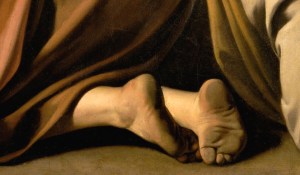 Many (if not all) cultures and languages use euphemisms, “polite” ways of referring to taboo subjects while avoiding direct unequivocal language. The main “taboo” subjects which need some “sanitising” tend to be: (1) death, so we may speak of someone “passing away” or “moving on” instead of saying they died; (2) certain bodily functions, and… Read more: ‘Feet’ in biblical euphemisms
 - Is the book of Ruth anti-David?
 The story of Ruth presents us with several ironic dilemmas. In this post I will deal with just one of them. The story begins with an Israelite family (Elimelech and Naomi and their two sons Mahlon and Chilion) travelling to the neighbouring territory of Moab during a famine. While there, Mahlon and Chilion marry Moabite… Read more: Is the book of Ruth anti-David?
 - David’s Problematic Ancestry
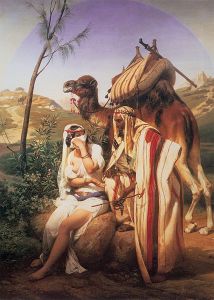 There are a number of problems with David’s ancestry: First, there is the problem of his legitimacy. When the prophet-judge Samuel went to the hometown of Jesse to find and anoint the future king of Israel (1 Samuel 16), Samuel invited Jesse and his sons to a communal event. After seven of Jesse’s sons were… Read more: David’s Problematic Ancestry
 - Could Julius Kronberg read Paleo-Hebrew?
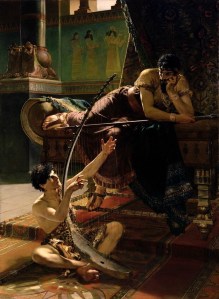 In three previous posts we have used the 1885 painting by Julius Kronberg titled “David and Saul” as an illustration. In my first post in a series titled “The Problem with Saul” (Unmaking a king) I commented in passing about this painting that “one would think from this painting that it was Saul, not Jonathan, who… Read more: Could Julius Kronberg read Paleo-Hebrew?
 - Name puns: names in the book of Ruth
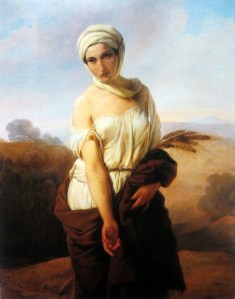 It has happened many times in my life that a brief comment made in passing has had a dramatic impact on my research interests or even changed the course of my life. For example, a throw-away line that some scholars read Jonah as parody, made in the course of a series of lectures on the… Read more: Name puns: names in the book of Ruth
 - The problem of Saul (4): Saul, David and Churchill
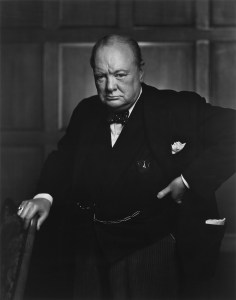 The quotation “History is written by the victors” is often attributed to Winston Churchill. It’s probably a paraphrase of a sentiment which Churchill expressed in a speech before the House of Commons on Jan. 23, 1948, in which he quipped: “For my part, I consider that it will be found much better by all parties… Read more: The problem of Saul (4): Saul, David and Churchill
 - ‘David and Michal’ by Virginio Grana, 1865, oil on canvas
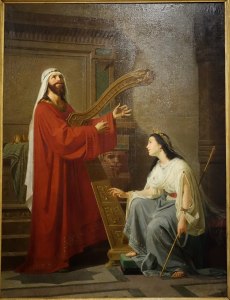 The painting ‘David and Michal’ is a beautiful work by the artist Virginio Grana. It was painted less than 200 hundred years ago and its subject matter seems to be rarely painted at all. I believe this may be because King Saul’s youngest daughter gets a bad rap in the Hebrew Bible and not many… Read more: ‘David and Michal’ by Virginio Grana, 1865, oil on canvas
 - The problem with Saul (3): Michal and the end of Saul’s line
 Michal was the youngest daughter of King Saul and the wife of King David. As such, she is a link between the two families and in some ways symbolises the tension between them. There are a number of strange, and troubling, things about the account of her marriage in the Book of Samuel. When we… Read more: The problem with Saul (3): Michal and the end of Saul’s line
 - The problem with Saul (2): Saul and Goliath
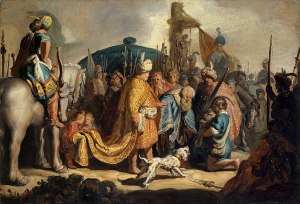 We all know the story of David and Goliath. Even if we don’t know the details of the story we’re familiar with the reference to an underdog overpowering a vastly stronger opponent, in this case a boy downing a giant with a slingshot and a single stone. We may not associate King Saul with the… Read more: The problem with Saul (2): Saul and Goliath
 - David and Saul, by Julius Kronberg, 1885
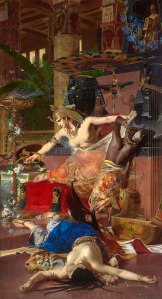 By Stephanie Cook. Stephen’s last post put a different spin on the relationship between David with Saul, with David coming out as the victor in the political wars of the time. Saul is portrayed as a bad king whose throne was given to another man, David. The painting of ‘David and Saul’ by the above… Read more: David and Saul, by Julius Kronberg, 1885
 - Heroes and villains (5): Abiathar and Zadok and the priestly contest for power and influence
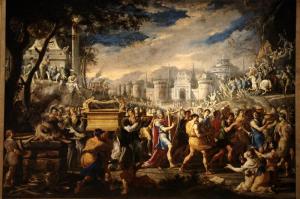 So far in this series I’ve argued that major differences between the biblical books of Kings and Chronicles are the result of them being written, or edited, by conflicting groups of scribes and priests, each presenting their own view of Israel’s history and protecting their own interests as religious leaders or influencers. But how did… Read more: Heroes and villains (5): Abiathar and Zadok and the priestly contest for power and influence
 - Heroes and villains (4): the art of writing and rewriting biblical propaganda
 It is evident from reading the parallel accounts of the reign of Solomon in Kings and Chronicles that the Book of Chronicles (1 and 2 Chronicles was originally one book) is a re-working of the Book of Kings (1 and 2 Kings was also originally one book, perhaps together with 1 and 2 Samuel*) which… Read more: Heroes and villains (4): the art of writing and rewriting biblical propaganda
 - Heroes and villains (3): the division of Israel into two kingdoms and its causes
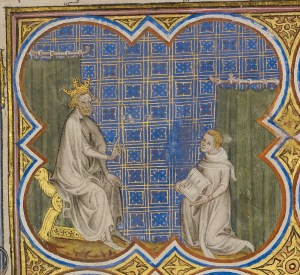 Solomon’s son Rehoboam succeeded him as king. After the legendary achievements of David and Solomon in establishing a kingdom which put Israel on the world map, Rehoboam is best known as the king who lost the greater part of the kingdom he had inherited. The book of Chronicles puts the blame on “certain worthless scoundrels”… Read more: Heroes and villains (3): the division of Israel into two kingdoms and its causes
 - Heroes and villains (2): the villainising of Jeroboam
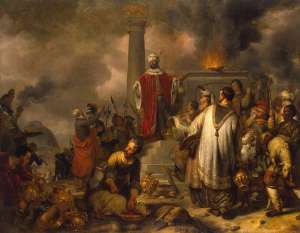 Despite being chosen by God to replace the Davidic dynasty with his own and to rule Israel, Jeroboam goes down in biblical history as “Jeroboam son of Nebat, who caused Israel to sin.” The book of Kings frequently uses two recurring devices in its final comments about the lives of the kings: those in the… Read more: Heroes and villains (2): the villainising of Jeroboam
 - Heroes and villains in the Bible (1): Solomon and Jeroboam
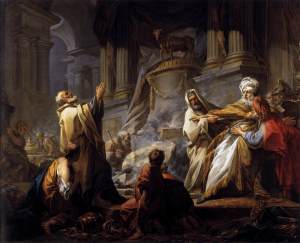 I remember when I was about ten years old my grandmother gave me a book called “Heroes of the Bible” which told the stories of the men my grandmother wanted me to imitate in my life: men like Noah, Moses, Samuel, and David. When I studied the lives of these men later in life I… Read more: Heroes and villains in the Bible (1): Solomon and Jeroboam
 - Solomon, Wisdom and Biblical Art History
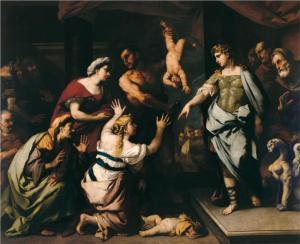 By Stephanie Cook Tim Rafferty and Stephen Cook have recently posted about Solomon’s wisdom, and Tim’s post was accompanied by a painting by Luca Giordano. (The painting here by Giordano titled The Judgement of Solomon could just as well have accompanied Stephen’s post.) Luca Giordano, 1634 to 1705, was an Italian late Baroque painter and… Read more: Solomon, Wisdom and Biblical Art History
 - Solomon’s dream at Gibeon
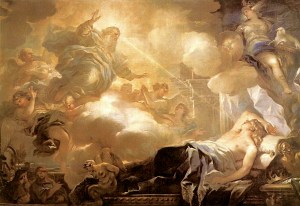 With this post Timothy Rafferty joins this blog as a contributing author. Tim is a good friend and a colleague at The University of Sydney in the Department of Hebrew, Biblical and Jewish Studies. This post, together with the previous one, comes out of a joint-paper which Tim and I presented at the recent National… Read more: Solomon’s dream at Gibeon
 - How wise was Solomon?
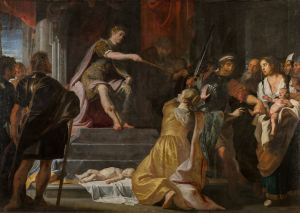 According to the Bible, the wisdom of Israel’s King Solomon was legendary. “Solomon’s wisdom surpassed the wisdom of all the people of the east, and all the wisdom of Egypt … People came from all the nations to hear the wisdom of Solomon; they came from all the kings of the earth who had heard… Read more: How wise was Solomon?
 - Inaccuracies in biblical art – a historical perspective
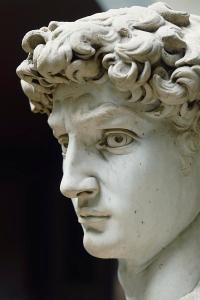 Following on from my blog post pertaining to the statue of David I would like to comment on the nature of David’s anatomy and the question of his circumcision. The statue, when executed, portrays David as uncircumcised when, as a Jewish man, he would definitely have been circumcised. There has been considerable discussion about whether… Read more: Inaccuracies in biblical art – a historical perspective
 - Michelangelo and the statue of David – a biblical theme loved by the artist
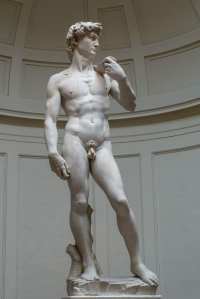 In my last blog post I mentioned the sculpture by Michelangelo of Israel’s king David. The statue is located in the Accademia Gallery in Florence, Italy. David is considered a masterpiece of Renaissance sculpture, created in the high renaissance period of Italy between 1501 – 1504. David is a 5.17 metre (17ft x 6.5ft) Carrara… Read more: Michelangelo and the statue of David – a biblical theme loved by the artist
 - ‘The David plates’ – Nine silver plates depicting early scenes of the Life of David
 A recent post showed a silver plate illustrating David’s confrontation with Eliab. In this blog post, the tenth I have written, I would like to explore the medium of silver in the form of decorative plates of the Byzantine era known as the David plates. These are a set of nine silver plates, in three… Read more: ‘The David plates’ – Nine silver plates depicting early scenes of the Life of David
 - “In sin my mother conceived me” – was David illegitimate?
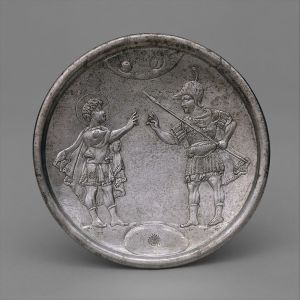 In an earlier post I suggested that there are some hints in the Bible that David’s childhood may have been troubled. In the story where the prophet Samuel went to the hometown of Jesse to find and anoint the future king of Israel (1 Samuel 16), Samuel invited Jesse and his sons to a communal… Read more: “In sin my mother conceived me” – was David illegitimate?
 - Giovanni Francesco Barbieri (Il Guercino)’s ‘King David’
 Giovanni Francesco Barbieri, also known as Il Guercino, was an Italian Baroque painter and draftsman from Cento in the Emilia region. He was born in 1591 and died in 1666. His craftsmanship developed from naturalism to a baroque style. Stephen mentioned his painting of King David in one of his recent blogs and commented that… Read more: Giovanni Francesco Barbieri (Il Guercino)’s ‘King David’
 - New year … new lookI began this blog at the end of 2011 so I thought it was about time I gave it a fresh appearance and made some minor enhancements to improve its functionality. The main thing you will notice is that recent posts will appear as a grid so you don’t have to scroll endlessly to find… Read more: New year … new look
- Edwin Long and Edward Poynter – Orientalism, Neoclassicism and Biblical Art
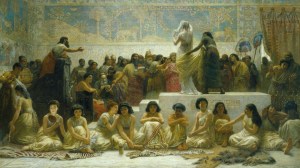 In one of Stephen’s blog posts on the book of Esther, he chose a painting by Edwin Long entitled ‘Queen Esther’ which was painted in 1878 and it resides in the National Gallery of Victoria. Edwin Long also painted a picture of Vashti, entitled ‘Vashti’ in 1879. He also famously painted a work entitled ‘Babylonian… Read more: Edwin Long and Edward Poynter – Orientalism, Neoclassicism and Biblical Art
 - David and Jerusalem
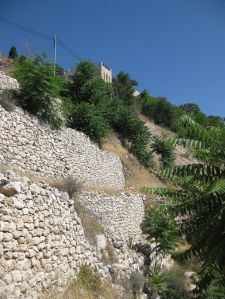 Considering that Jerusalem is such an important city in the Bible and central to Israel’s worship, it is somewhat surprising that so little is said about its conquest in the historical narratives. What little is said also appears to be confusing and contradictory. Let’s try to sort it out. The earliest biblical reference to the… Read more: David and Jerusalem
 - David and Goliath: history or legend?
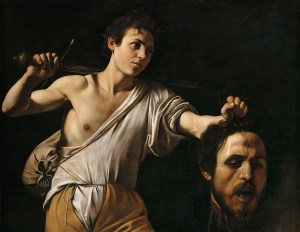 The story of the boy David slaying the giant Goliath is undoubtedly one of the best known stories in the Bible. But did it really happen? Are all the stories in the Bible meant to be taken as historical facts, or were some of them written for some other purpose? We tell stories, we read… Read more: David and Goliath: history or legend?
 - Jonah, Samuel and satireI had the honour of presenting a paper to the Fellowship for Biblical Studies in Sydney last week. Due to the coronavirus this was our first online meeting so it created some interesting challenges, and delivering a paper online was a first for me. Unfortunately, I lost my internet connection a couple times during the… Read more: Jonah, Samuel and satire
- (Re)writing the Bible: solving contradictions between Kings and Chronicles (and in the Gospels)
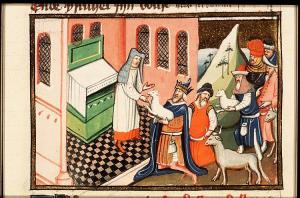 I was raised in a denomination which firmly believed in the “inerrancy” of the Bible and any apparent contradiction between one part of the Bible and another had to be resolved. This usually meant that the alleged contradiction was explained in such a way that the contradiction no longer existed, and sometimes it meant “doubling… Read more: (Re)writing the Bible: solving contradictions between Kings and Chronicles (and in the Gospels)
 - Name puns: Solomon as a man of peace
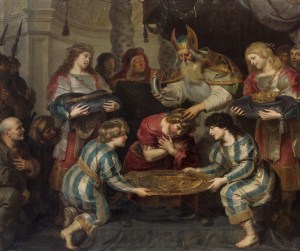 Puns on names of people is a common phenomenon in many languages, including biblical Hebrew. Puns do not, however, translate easily from one language to another and so they are often lost in translation. The Bible contains a few well-known name-puns, largely because they are explained in the text or in translators’ footnotes. For example,… Read more: Name puns: Solomon as a man of peace
 - The Bible in Conversation with itself (3): Why two (different) accounts of the reign of Solomon?I’ve already raised the question of why the Bible includes two versions of the history of Israel. A clue as to why we have different versions can be discovered by looking at the two different accounts of the reign of Solomon, traditionally regarded as one of Israel’s greatest kings. The books of Kings and Chronicles not only have different… Read more: The Bible in Conversation with itself (3): Why two (different) accounts of the reign of Solomon?
- How to read Samuel and KingsMy title sounds a bit presumptuous: as if anyone needs to be told how to read the Bible! It’s really a kind of postscript to my previous posts about the possibility that David was a narcissist (yes, I know I said I was finished with that subject for now, but I thought this further note… Read more: How to read Samuel and Kings
- David and Joab – being the friend of a narcissistThis will probably be my final post, at least for now, in my series about David being a narcissist. I wanted to write something about what it’s like to be the friend of a narcissist, and in some ways I can relate to the biblical character Joab who seems to me to have been one… Read more: David and Joab – being the friend of a narcissist
- David, Amnon, Tamar and Absalom – narcissism and its family consequences
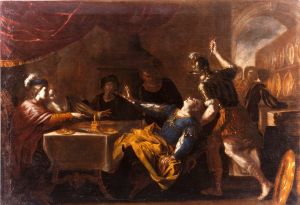 According to the book of Samuel, David’s family life was a mess! The biblical records don’t hide the facts that David was an adulterer, a murderer, a terrible father, a lousy husband and not much of a king either. On the positive side, it seems he was a pretty good musician and song-writer, but not… Read more: David, Amnon, Tamar and Absalom – narcissism and its family consequences
 - A biblical homophobic slur?A few posts back I wrote about the laws in Leviticus which are often quoted as evidence that the Bible condemned homosexuality, and discussed the term “uncover the nakedness of … [one’s father, mother, sister, etc].” I said there that this is generally regarded as a euphemism for having sex with that person, specifically… Read more: A biblical homophobic slur?
- Did David really care for Mephibosheth?I tentatively suggested in my two prior posts that David may have had Narcissistic Personality Disorder (NPD). As I understand it, narcissism is a spectrum and NPD is at one end. In the middle, or at the other end depending on how you devise the spectrum, is where the majority of people sit, with a… Read more: Did David really care for Mephibosheth?
 מִקְרָא Mikra: Biblical studies