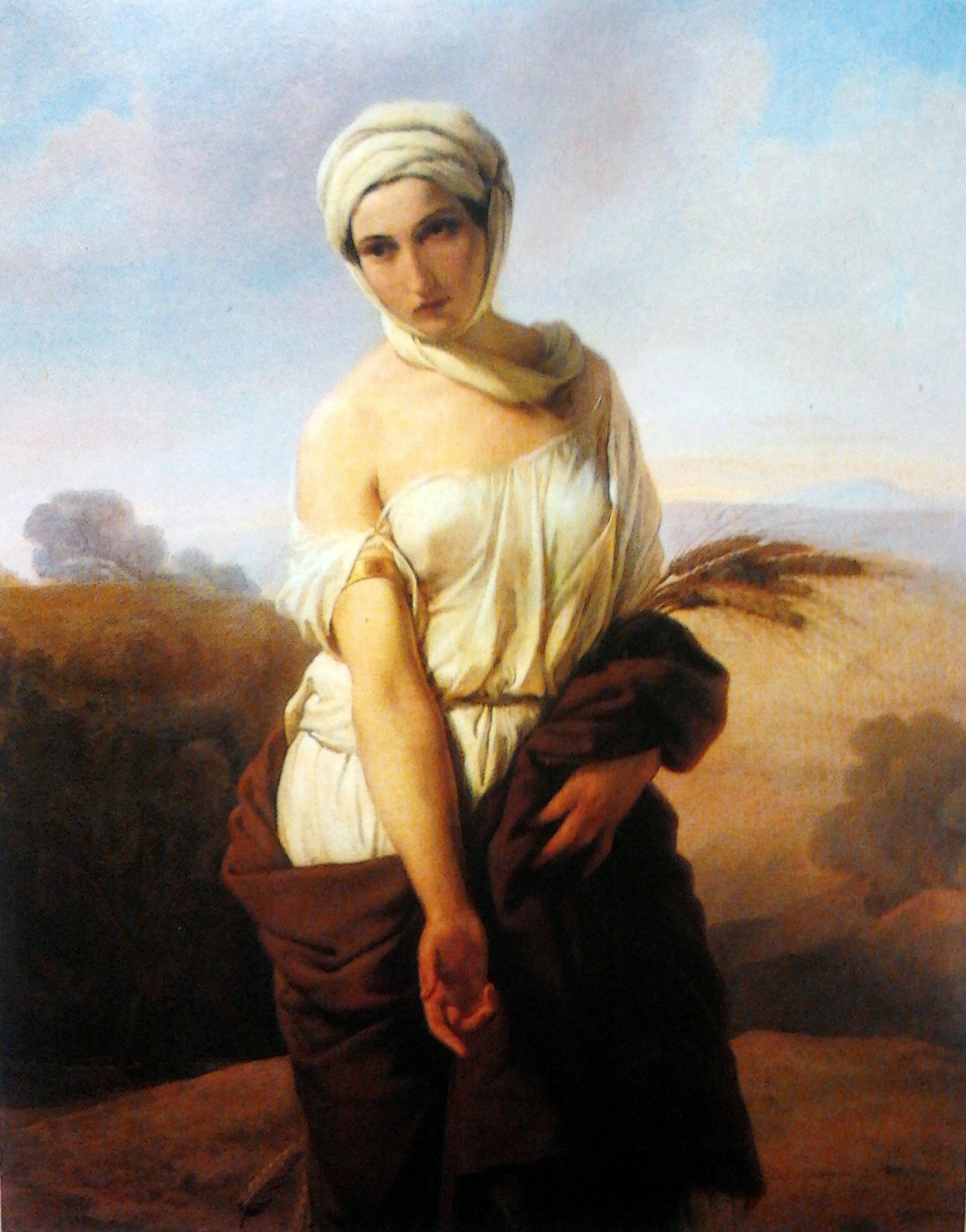
It has happened many times in my life that a brief comment made in passing has had a dramatic impact on my research interests or even changed the course of my life. For example, a throw-away line that some scholars read Jonah as parody, made in the course of a series of lectures on the Book of Jonah by a visiting academic to the University of Sydney,[1] inspired me to research humour in Jonah for my Honours thesis, and then go on to write a PhD thesis on reading Jonah as satire. I hadn’t planned at that stage to do Honours, let alone a PhD, so it was literally life-changing. Humour, parody, irony and satire in the Bible has continued to be my major research focus. So I was intrigued by a comment during a keynote address at the most recent Fellowship for Biblical Studies (FBS) Conference by Professor (Emerita) Suzanne Rutland, outlining the history of academic Biblical Studies in Australia, that Professor Maurice Goldman – the foundation Chair of Semitic studies at the University of Melbourne (1945) and a founder and first president of FBS (in 1950) had an interest in humour in the Hebrew Bible in general and in Jonah and Ruth in particular. His first presidential address on “Humour in the Hebrew Bible” was subsequently published in the Australian Biblical Review in 1952. Goldman cited the frequent use of puns on names in the book of Ruth and wordplays in Jonah as examples. Having now studied humour in the Bible for several years, those ideas are uncontroversial to me, however Goldman’s article apparently caused a bit of a stir at the time – perhaps not surprisingly because religion (and biblical studies) is serious business after all, and most scholars at the time saw little or no possibility of humour in the Bible.
Goldman noted that the Scroll of Ruth has many common characteristics with the story of Jonah. He argued that both were conceived at approximately the same time and both were written in the spirit of a protest against ultra-nationalism and super-patriotism. I was intrigued that Goldman sought to understand the use of humour in these books within their socio-political contexts, and while he and I might come to different conclusions about the historical, political and theological backgrounds, I recognised that we are both on the same page, so to speak. I decided that a closer look at Ruth should be one of my next research projects.
In his article on humour Goldman claims that “the whole scroll is … full of puns on names” although he dedicates only two paragraphs to them. While this post is not meant to be exhaustive or definitive I’d like to flesh it out further. We are alerted by the (unnamed) writer of Ruth to the use of at least one name-pun:
Call me no longer Naomi, [which means pleasant]; call me Mara, [which means bitter], for the Almighty has dealt bitterly with me. (Ruth 1:20)
However, by the time we are alerted to this pun on Naomi’s name we have almost certainly encountered several others. First, there is a possible irony in the opening verse which says “there was a famine in the land, and a certain man of Bethlehem [which literally means “house of bread” or “place of food”] in Judah went to live in the fields of Moab”. That may be a coincidence, but in the very next verse we learn that his two sons were named Mahlon (which means sickly) and Chilion (which means frail). Some of the commentaries try to explain these odd name choices by explaining that in the ancient world infant mortality was high and so “Sickly” and “Frail” may not have been unusual names for children who might not have been expected to survive infancy. Seriously?! Are commentators so determined not to find humour that that is the best they can do?! These boys did, however, survive infancy and went on to become adults, marrying, and outliving their father. The text devotes just four verses to them ending, unsurprisingly, with “and they died.” I can think of three possible reasons for these odd names:
- These were their actual names, and they literally meant “Sickly” and “Frail”, possibly for the unconvincing reason I’ve just mentioned (well, it’s unconvincing to me). If you want to read Ruth as actual history then you are forced to take this approach.
- These were not their actual names, but their real names may have sounded similar to the words for sickly and frail and so the writer is playing with their names. This is a fairly common literary device in the Hebrew word, as I mentioned elsewhere with reference to a wordplay on the name Nabal in a story where his wife says to David “My lord, do not take seriously this ill-natured fellow, Nabal; for as his name is, so is he; Nabal is his name, and folly is with him” (1 Samuel 25:25). The pun isn’t obvious in the English translation but the explanation lets us know that one exists. In fact, the Hebrew Nabal נָבָל (more correctly pronounced Naval) means “foolish”, “worthless” or “good for nothing”. Since it is unlikely his parents hated him so much as to call him “fool” from birth, scholars have discussed how the name might also be understood according to an alternative Semitic root meaning “noble.” The meaning “fool” would be a play on the double meaning of the name. It’s a word-play: his name may actually have meant “noble” but it sounded like the word for “fool” so it would be an easy way to denigrate him.” So here, with Mahlon and Chilion, the writer may have altered their names slightly to change their meanings to create a humorous wordplay.
- It is possible that the whole story is made up and these names were devised by the writer to describe the characters. This is precisely what John Bunyin did in his Pilgrim’s Progress with names such as Christian, Evangelist, Obstinate, Prudence, Faithful, and Pilgrim. What better names to give two characters who will die early in the story than Sickly and Frail? It also sets the scene where the dominant, strong characters are women – in contrast to the more typical male-centric patriarchal narratives.
The writer doesn’t stop with these three. The next two characters to be introduced are named Orpah and Ruth. The name Orpah is probably related to the Hebrew word for “neck” and so some scholars have suggested that it means “stiff-necked” or obstinate, although the Hebrew word more precisely means the back of the neck and is related to a verb which means “to turn ones neck” or “turn around”. Ruth is probably derived from a common Hebrew word for “friend” or “friendship”. It’s hardly surprising that as the story progresses Orpah turns around (although not with any negative connotations, she simply returns to her own country following Naomi’s instructions) while Ruth becomes Naomi’s friend (Ruth 1:14-17).
This leaves just two more main characters: Elimelech, Naomi’s husband, and Boaz, who becomes Ruth’s husband. Elimelech is fairly straightforward and means “my God is king” – a good Hebrew name for a faithful Israelite – while the meaning of Boaz is less certain and may come from a root meaning “to be strong” (it was the name given to one of the two pillars at the entrance to Solomon’s Temple [1 Kings 7:21], where “strength” would seem to be appropriate) or quite possibly “lively.” One scholar has suggested it means “of sharp mind.” Whatever it means, it is fairly certain that these two names are positive (in contrast to Mahlon and Chilion). After being married to Mahlon/Sickly, Ruth does much better with husband number two – Boaz/Strong. Ruth and Boaz have a son named Obed, which means “worshipper” and he becomes the father of Jesse, the father of David. The story which began with “My God is king” and journeys through death and despair in a foreign land, ends fairly appropriately with “Worshipper” back in the Promised Land.
What is the point of these puns? Are they simply to entertain, or to impress the reader that the writer is clever? Puns are often used in humorous or satirical contexts (although the mere presence of puns doesn’t mean the text is necessarily humourous), but is Ruth intended to be read that way? In an earlier post I argued that ” it seems that the whole point of the book of Ruth is to explain and perhaps smooth-over David’s Moabite ancestry.” In fact, the story ends with the geneology of David and the very last word of the book is “David” which is perhaps a clue that his connection to the story may indeed be the very point of the story. There certainly are some other side-issues which are worth exploring, such as the friendship between two women from different cultures (although we don’t know enough about the differences between Israelite and Moabite cultures at the time, owing largely to the lack of surviving Moabite literature to conclude much about this); the relationship between Ruth and her new husband Boaz; and the legal role of a kinsman-redeemer. At some time in the future I hope to explore the possible polemic purpose of the book, and the connection to the story of Lot and his daughters as the ancestors of the Moabites.
[1] Prof. Yitzhak (Itzik) Peleg, now Professor (Emeritus) of Bible Studies at the Gordon Academic College, Haifa, Israel. At that time, if I recall correctly, he was the Chair of the Department of Bible and Jewish Culture at Beit Berl Academic College.
 מִקְרָא Mikra: Biblical studies
Haha, I gathered as much about spelling variants al over the place after looking her up with the simplest web-search starting out with the obvious wikipedia and then on and on looking at every possible lead and fell from surprise to amazement ending up LOL. Seems there is even a spelling variant Οξα(a sourpuss?)and then I was assured my first hunch wasn’t that crazy, just neigh impossible to corroborate because extant manuscripts seem not reliable enough to be certain what the original spelling was. All spellings are useable in my scenario, as I already contended. The Ασχα in line 15 isn’t even in the Hebrew text so my explanation it not being related to the Ἀζὰ in 12 and 13 is a bit stronger, I really think it means something like unwavering, unstoppable in this context.
Rest assured, I stand by my hunch, not because I consider it proven, but because all it’s possibilities give me a rather humorous story about a man making a foolish, rash vow in order to get rid of the last unwed daughter in the household that had a too acidic personality to attract any wooing by herself. In those kind of rash vow stories things always go awry and here the outcome is he had to wed her to a full nephew and both victims didn’t agree to this incestuous prospect and she goes up to her father guns all blazing to force him to annul the vow, which he does of course, because she is too hot to handle. I think it’s funny, brimming with verbal irony and I prefer this over the incomprehensible gibberish that is seen in traditional translation.
I love all theories about originals being corrupted over time by clumsy copyists or intentional meddling for pious nefarious reasons and so on about original Vorlages and early translators and a lot of sharp minds will forever dull there knife-edges on that Gordian knot of old but I am just interested in the stories in the good book and will continue to try and patch up all the gibberish to make the stories whole again for my personal gratification.
Thank you for this article, stimulating and open-minded as ever.
By the way, marrying a first cousin isn’t incestuous, neither from a biblical perspective nor in this country where I live.
That is probably a too formal approach, most but not all cultures condone it, but most of the time it is frowned upon at least and in literature and among the common public a lot of wink wink nudge nudge will inevitably result. I think that at least didn’t help this forced wedding being accepted by the victims.
BTW did a quick check and there are a lot of modern countries where it is considered incest and even punishable by law, a lot more than I realised . The USA is the most weird with incest rules because every state applies rules differently. There was even one state allowing 65+ full cousins dispensation from the rule if a medical attestation confirmed there could be no offspring, then they could marry without problems.
Wow, puns with names. I think it is possible there is punning in personal names for conveying meaning in literature, but then personal names outside of family inheritance lines were often just descriptors of the outer appearance or character of persons, nicknames, like the redhead or the small or big one, or the greedy or timid one. I think looking into that will have impact on some of the traditional translations of Bible stories. I always check the literal meaning of names when I read a story in the bible just to make sure it is really a proper personal name or just an adjective that is part and parcel of context of the story.
To give a clear example of what I mean:
In LXX Judges 1:12 Caleb promises his Ἀζὰ θυγατέρα to the one who takes the city of letters. This daughter is described as dry, or with unsatisfied desire, to put it more plainly! if we follow the Greek-English Lexicon. I don’t think Ἀζὰ was her given name at birth, what kind of parent would do that?
Clasina, in Hebrew Achsah (עַכְסָה) means an “anklet”, a piece of jewellery. The LXX seems to transliterate that with Ασχαν.
Hmm, in Judges I see Ἀζὰ θυγατέρα twice and in line 15 Ἀσχά, but that is not a name either and in my opinion unrelated to the former. ἀσχαδής means not to be restrained, ἄσχαστος unshakeable or firm. It fits the context, the girl is pressing Caleb stubbornly to do her bidding.
Now the anklet is interesting. Jewellery has a signal function among women, in many cultures an anklet is still regarded as signal for sexual availability. In the bible mention of jewellery on women is often in a context that is even worse in association with harlots of a kind. Could it be this is like in the case of Ἀζὰ being dry another descriptor of the daughter being available?
Clasina, can you please give me the actual verses where you see Ἀζὰ. In the Septuagint version I am using the name Ασχα appears 3 times, in Judges 1:12, 13 and 15. Similarly in Joshua 15:16, 17. The Greek Ασχα is a straighforward transliteration of the Hebrew עַכְסָה Achsah. It is common for the Septuagint to transliterate Hebrew names rather than to translate them. I cannot find Ἀζὰ anywhere in the Septuagint I am using (Septuaginta, edited by Alfred Rahlfs, Editio altera by Robert Hanhart, ©2006 Deutsche Bibelgesellschaft, Stuttgart).
I have no paper Septuagint of my own(maybe time to acquire one). I once was told there is not even a reliable translation into my own language, so I tried to make do with my own translation. I usually consult the online Greek version on biblehub.com, that’s Swete’s Septuagint.
There verses 12 and 13 show Ἀζὰ θυγατέρα, line 15 Ασχα. The reason I considered Ἀζὰ with meaning dry as genuine was of course all the wordplay with moist and water later on in the story. Now you tell me it’s not even there, I feel duped into barking up the wrong tree.
Clasina, I had quite a bit of fun today trying to sort this out. Greek isn’t my thing so I asked a friend – a colleague at the University of Sydney – if he could make sense of it. So here is my condensed version of his explanation:
There are two main versions of Judges in Greek (Alexandrinus or “Judges A” and Vaticanus or “Judges B”).
Swete only presents a diplomatic edition of the Vaticanus text (Judges B, while Rahlf has critical editions of both A & B. (For an explanation of “critical editions” see http://ccat.sas.upenn.edu/ioscs/editions.html). Alexandrinus (Judges A) is generally thought to be the superior text.
Judges A unambiguously has ασχα. Judges B is more complicated. When you look at Vaticanus, the text has been corrected from αζα to ασχα in verses 12 and 13 and Sweet notes this in a footnote. In v.15 Vaticanus (and Swete) has ασχα. The reading αζα is not supported by the other witnesses to Judges B so it seems to be a quirk of Vaticanus.
In brief, this is what we find in Rahlfs and Swetes versions:
Rahlfs A: ασχα
Rahlfs B: ασχα (but notes that Vaticanus’s original text says αζα, but corrected to ασχα)
Swete: αζα with the correction to ασχα in a footnote
Swete is presenting Vaticanus diplomatically, i.e., exactly as it is in that particular manuscript.
Rahlfs B is presenting a critical edition of the text-type to which Vaticanus is the main witness. So mostly Rahlfs B=Swete, except where Rahlfs concluded that there was an error in Vaticanus. Does that make sense?
The short version is this: substituting sigma+chi for zeta is quite odd and is therefore probably an error in Vaticanus. Swete reproduces the error (though notes that there is a correction with a footnote) because his edition is diplomatic not critical.
Interestingly, Joshua brings up other issues because it has αχσα (Achsah) not ασχα (Aschah). Joshua’s version is closer to the Hebrew Achsah (and you shouldn’t assume that Joshua and Judges were translated in the LXX by the same translator). The metathesis χσ to σχ is quite plausible because χσ doesn’t naturally occur in Greek, whereas σχ is rather common. The translator of Judges probably went with a spelling which was more natural to a Greek ear.