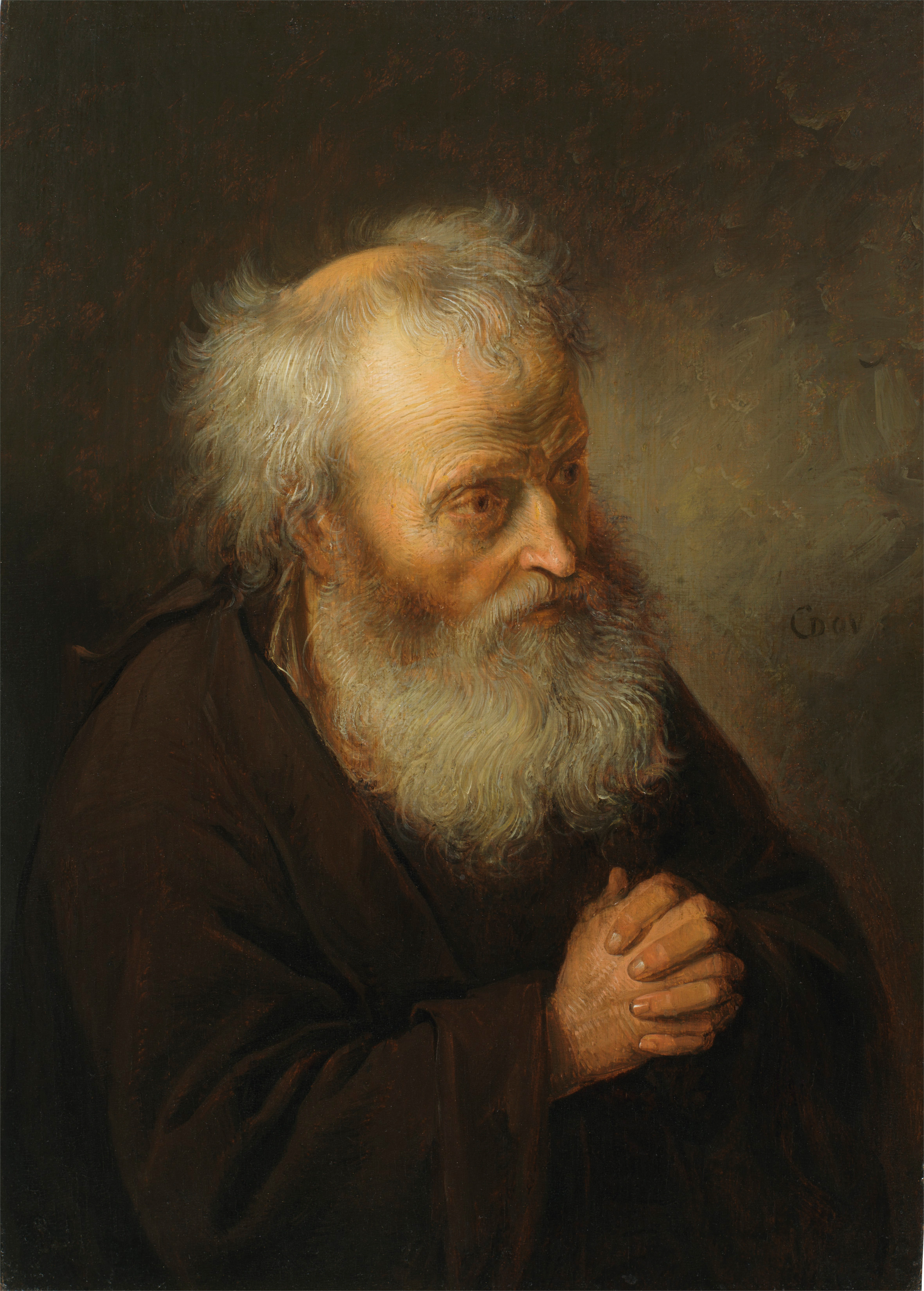
The prayer of Jabez, almost hidden in Chronicles amidst a mass of genealogical records, was popularised more than 20 years ago by Bruce Wilkinson’s bestseller The Prayer of Jabez which sold more than 9 million copies.1 It’s a tiny book with less than 100 pages. Without a single academic citation or acknowledgement it’s clearly written for a popular non-scholarly audience. While it sold well in some evangelical circles, the book has also been critised for promoting the ‘prosperity gospel,’ and the spin-off sales of products such as coffee mugs, t-shirts, scented candles, and framed prints has no doubt contributed to the harsh skepticism. Its popularity may have been due in part to the hope that it offered a quick route to prosperity: “Here, say this prayer, and you’ll be successful and prosperous, nothing to it.” In fact, Wilkinson practically guarantees it, calling it “a daring prayer that God always answers” and “the key to a life of extraordinary favor with God.”2 But just who was Jabez, and is that really what the prayer is about?
I say that the prayer of Jabez is “almost hidden in Chronicles amidst a mass of genealogical records”. What is possibly even more puzzling is that these very chronological records don’t actually tell us who he was, or where he fit in those genealogies. There seems to be absolutely no connection between Jabez and the people listed in the genealogies. In the midst of a long list of descendants of Judah we read “Jabez was honored more than his brothers; and his mother named him Jabez, saying, ‘Because I bore him in pain'” (1 Chron. 4:9). Oddly, he isn’t listed as one of Judah’s descendants and no connections are made between him and anyone in the list. His father is not named, and there is no mention of offspring. He just appears, and then disappears again. It almost looks like there was a gust of wind which blew some scribe’s notes around, stories got jumbled up and the two verses about Jabez just landed here, completely out of place. (I’m not saying that’s what happened; it’s just what it looks like!)
And then, just as oddly, we are given this little story about his prayer being answered, but no further details about its background or significance.
Jabez called on the God of Israel, saying, “Oh that you would bless me and enlarge my border, and that your hand might be with me, and that you would keep me from evil and harm!” And God granted what he asked.
1 Chronicles 4:10
An interesting thing about the naming of Jabez by his mother is that it appears to involve a pun. She named him Jabez, saying, “Because I bore him in pain.” From this, we would expect his name to be related to pain, in a similar way to how Rachel named her son “Benoni” (which means “son of my sorrow”) as she was dying (Genesis 35:18), although her husband Jacob renamed him “Benjamin” (“son of my right hand”). However, Jabez doesn’t mean “pain”; instead, it is derived by rearranging letters. The letters of עצבי atzbi – the final word of Jabez’s prayer “keep me from evil and harm” – are re-arranged to form יעבץ yabetz, which becomes “Jabez”.3 This, however, is not the word Jabez’s mother used when she named him. Instead of saying “my pain” (which would be עצבי atzbi) she said בעצב b’otzev, meaning “in pain” so the pun doesn’t quite work, if at all. Moreover, to follow the same naming pattern found in other biblical naming stories, his name should have been Jazeb, not Jabez. The whole naming pattern seems strangely forced – or perhaps even humorous.
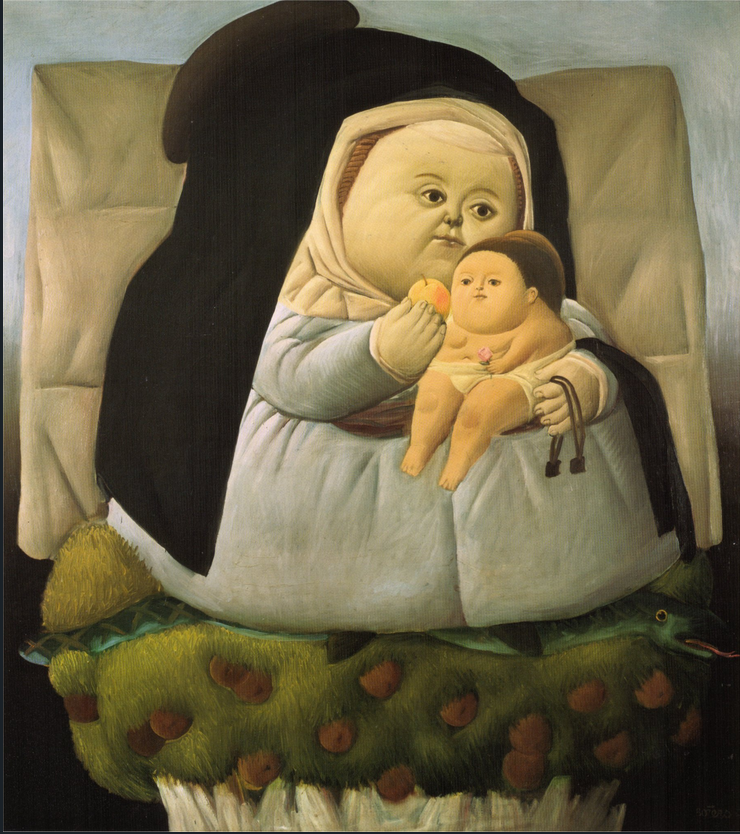
One interesting idea about Jabez’s name is that in the first words of this little story – “Jabez was honoured more than his brothers” – the Hebrew word translated as “honoured” (נִכְבָּד) is ambiguous and could just as easily mean “Jabez was heavier than his brothers” (the Hebrew word for honour or glory comes from a root meaning “heavy”). This might explain his mother’s naming pun. As Rodney Clapp has put it, his painful birth was “presumably caused by bearing a son heavier than his brothers. To put it bluntly, Jabez was a fat baby.” This might also explain why Jabez asked God to “enlarge my border” or “expand my territory.” It’s a humorous continuation of the “fat-baby” trope, suggesting he had an insatiable appetite into adulthood demanding more food-producing land.4 The last part of his prayer – “keep me from evil and harm!” – may have a similar meaning. Christopher Heard has noted a problem here with the Hebrew syntax and has well argued that the problem is resolved if the Hebrew word translated “from evil” (מֵּרָעָה) is “re-pointed” and the final line is then read as “make pastureland [available] without my causing grief”, or “without my having to struggle [for more land].”5 This would suggest Jabez’s desire for a non-violent acquisition of pastureland without harm to others.
Another odd thing about the name “Jabez” is that elsewhere in Chronicles it is also the name of a town. This is not unheard of in the Hebrew Bible as there are other instances of people being named after towns, or towns being named after people. However, there is no obvious connection between the town Jabez and the person Jabez. This town is unlikely to be the “expanded territory” for which Jabez prayed. What is interesting, is that the town is listed as a place where three families of scribes lived (1 Chronicles 2:55). In Jewish rabbinical tradition, Jabez (the person) founded an academy for scribes and for teaching Torah. According to the same traditions Jabez and Othniel were the same person (again, it’s not unheard of in the Hebrew Bible for someone to have two names e.g. Jacob/Israel). There is a possible biblical source behind this tradition: in Joshua 15:15-17 and Judges 1:11-13 we have the story of Caleb offering his daughter Achsah to be married to the person who attacked and conquered Kiriath-sepher. (I mentioned this story in a post about a possible fart joke in the Bible, which is actually one of the most read posts on this blog – perhaps not surprisingly as fart jokes are bound to get unmerited attention!) The word “sepher” in the name Kiriath-sepher is the Hebrew word for a scroll, or book, and is the root of the Hebrew word for “scribe”. Othniel conquered the town and won the prize (I’m not sure how Achsah felt about being his prize), and as Othniel is mentioned later in 1 Chronicles 4:13, just three verses after the story of the prayer of Jabez, it is not difficult to see how the rabbis who wrote the Talmud connected the dots. They understood that Othniel, who captured this scribal town, later established his own academy there and then it was re-named after him (or rather, his “other” name Jabez). A few assumptions must be made to reach this conclusion, but that’s the nature of legend I suppose. It is quite possible that the scribes who wrote Chronicles knew about the legendary Othniel, Kiriath-sepher and Jabez connections, because some of them trained at the Jabez-academy, or simply because scribes are likely to know stories about scribes.
Sara Japhet, who has researched and written extensively about Chronicles, has argued that this story is not typical of the Chronicles genre and may be a “reworking of an earlier source, or an unretouched record derived from later material of some kind” and inserted later.6 Whoever inserted this story, and when, is unknown but perhaps they dropped this story about Jabez into the genealogical records where they did, because they understood Jabez and Othniel to be the same person, or somehow connected. We may never know. What we do know, is that repeating the prayer of Jabez is not a guaranteed path to success and prosperity (although it may have been for the people selling books and merchandise)!
_________________
1. Bruce H. Wilkinson, The Prayer of Jabez: Breaking Through to the Blessed Life (Sisters: Multnomah, 2000).
2. One commentator says “Readers of [Wilkinson’s] The Prayer of Jabez may come to imagine God as a cosmic Santa Claus, merrily doling out gifts to any individual who asks. And asks. And asks.” Rodney Clapp, “God as Santa: Misreading the prayer of Jabez” The Christian Century Vol. 119, No. 2, 2002.
3. The letters צ and ץ are the same letter in Hebrew. ץ is what is called “the final form” and is the way the letter צ is written when it is at the end of a word.
4. Clapp sees satirical humour in this story. “Jabez’s corpulent affliction continues into adulthood, meaning he needs increased amounts of food (and so more arable property) to sustain his girth and, in his anxious and hungry eyes, his very life. The multivalence of the text may invite us to recall the village or family of Jabez mentioned in 2:55. Perhaps the Judean village of Jabez had an enlarged estimate of itself, gobbling up the surrounding countryside from other villages or families for its own hearty appetite. If so, the text gently mocks the Jabez family’s insatiable hunger while acknowledging, nonetheless, that God heard and responded for its provision.”
5. Heard, R. Christopher. “Echoes of Genesis in 1 Chronicles 4:9–10: An Intertextual and Contextual Reading of Jabez’s Prayer.” Journal of Hebrew Scriptures 4, no. 2 (2002): 1-28. The Hebrew Bible was originally written using only consonants, and the vowels were added to the text by the Masoretes in the medieval period following traditional pronunciation. “Re-pointing” refers to the practice of reading some words with different vowels to the Masoretic Text, to give a different possible reading. This is a sound argument because “pastureland” is the more frequent reading elsewhere in Chronicles, and ties in with the theme in Chronicles of grazing lands being part of territorial expansion.
6. Japhet, Sara, I & II Chronicles: a Commentary. Louisville, Ky: Westminster/John Knox Press, 1993.
 מִקְרָא Mikra: Biblical studies
Hmm, something nagging in the back of my brain. I have to admit I am not a religious person, so I probably do not understand the intricacies of how things ought to work. Something struck me as I read note 2 above about the Santa Claus analogy. Why is this considered a prayer? It sounds more like overly greedy wishing, almost demanding like a spoilt brat and also considering the whole story of Wilkinson’s tawdry attempt to earn a quick buck over it, should we even regard it as a prayer? Without a commensurate vow I don’t think we should call it a genuine prayer altogether.
I noticed you mentioned the somewhat analogue story of the birth of Benjamin being named Benoni first. There is of course another one that even relates the same word for honourable/glorious and weighty, that is the birth of Ichabod in 1 Samuel 4:21:
21And she named the boy Ichabod, saying, “The glory has departed from Israel,” because the ark of God had been captured and her father-in-law and her husband had been killed.
Looks like the same kind of pun.
Hi Clasina, yes, that’s a nice pickup. The pun is obvious in that case: “she named him I-kavod (“where is the glory?”), saying the kavod (glory) has departed from Israel.”
Suree Steven, but that is not all of it.
In this case the pun is not isolated in the instance of the birth of the child. It is an ongoing gag, the head of it starting in the previous chapter where the sons of Eli start fattening themselves with the offerings of the people of Israel and are cursed for it, then the death of Eli in the next chapter was partly caused by his weight followed by the painful birth of Ichabod and then to give the story a tail end in the following chapter the hand of the Lord is heavy on the Philistines because of the presence of the captured Arc of the Covenant. Please check on it yourself, my Hebrew is not that good, but even the wobbly translation gave it away to me. Chapters 2, 3 and 4 of Samuel 1 all abound with this kavod and it is easy to see how glory or honour for some are at the same time a burden to others.
Thank you for pointing out this ambiguity of the word, so I could knot the story together in a meaningful way. Now it all makes sense and I can enjoy the macabre humour in it’s full glory. 🙂
I tend to agree with your intuition on this hidden story. I also think that there is some joke here and it has to do with a man who has an inclination for wanting more without having to work for it. He was born as a big baby and in his adulthood he still has an appetite for more. But to make the joke fully work I would describe his birth not as causing pain, but as requiring much labour.
As usual I took the liberty checking the story in it’s Greek version, but in that language the punning with the name seems to lead nowhere, unless the word γαβαλάν=labourer is of application here. Some long-shot hèh?
I think the story is definitely humourous, or at least has a humourous element. The big question in my mind is what is a humourous story doing in Chronciles of all places?! I’d expect to see it in Genesis or Samuel-Kings, but not here. I have a theory on that which I’ll post shortly.
Eagerly awaiting that theory.
On the other hand, this short story does not necessarily constitute real humour. There is no funny punchline in the end, it sort of flatlines. There is no comic reversal or relief. The story tells us someone born big or rich tends to grow even bigger/richer without any real effort. It does not reflect any social or political critique as in satire, it just poses a reality of life without explicitly lauding or criticizing it. What is the point of inserting it and why this particular location among boring genealogies?